Verdict
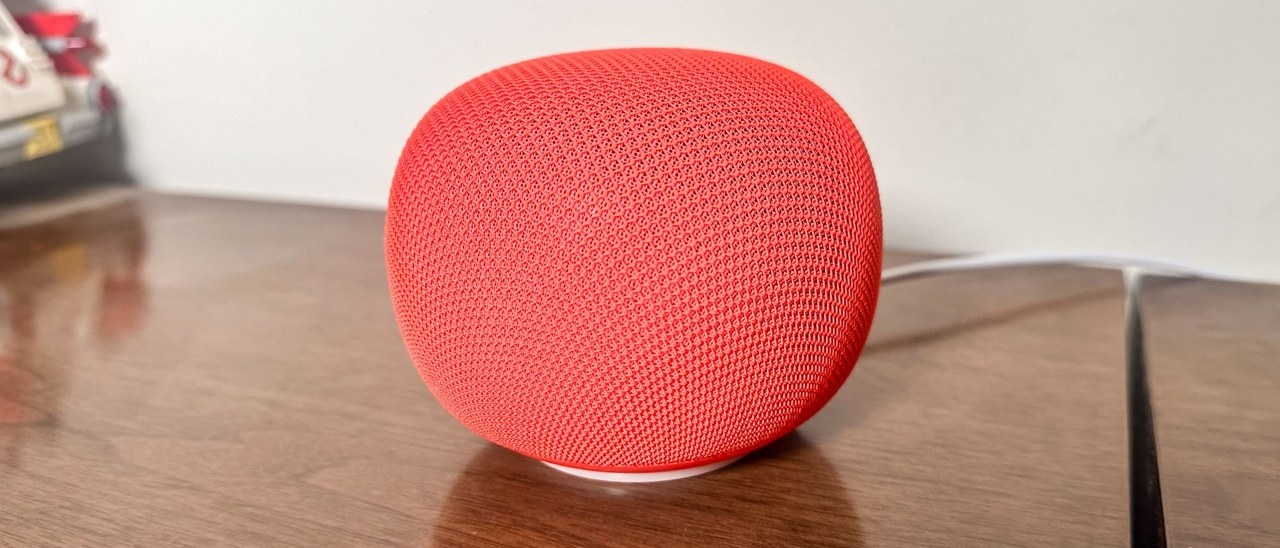
The Google Home Speaker shrinks the footprint of the discontinued Nest Audio, but offers few improvements beyond its design. It merits consideration for Google Home households, although competing Apple and Amazon speakers include more smart home features.
Strengths
- Physical microphone mute switch
- Appealing, though familiar, styling
- Capable Gemini assistant
- Home theater support through Google TV Streamer
Weaknesses
- Difficult-to-locate touch controls
- A subscription is needed to unlock all Gemini features
- Missing the smart home sensors available in rival speakers
Announced in fall 2025, the Google Home Speaker took almost nine months to reach stores. It succeeds the six-year-old Google Nest Audio as Google's flagship smart speaker, with AI capabilities representing a bigger change than the hardware. Tom’s Guide reviewer Michael A. Prospero used it for several days, comparing it with the Apple HomePod mini and Amazon Echo Dot Max.
Price and availability
The Google Home Speaker launched on June 24, 2026, priced at $99. Colors include Jade (green), Berry (red), Porcelain (white) and Hazel (grayish black), with Jade and Berry available only in the U.S.
It replaces the Google Nest Audio and, for now, the Google Nest Mini. Neither older model remains available from Google's online store.
Design and controls
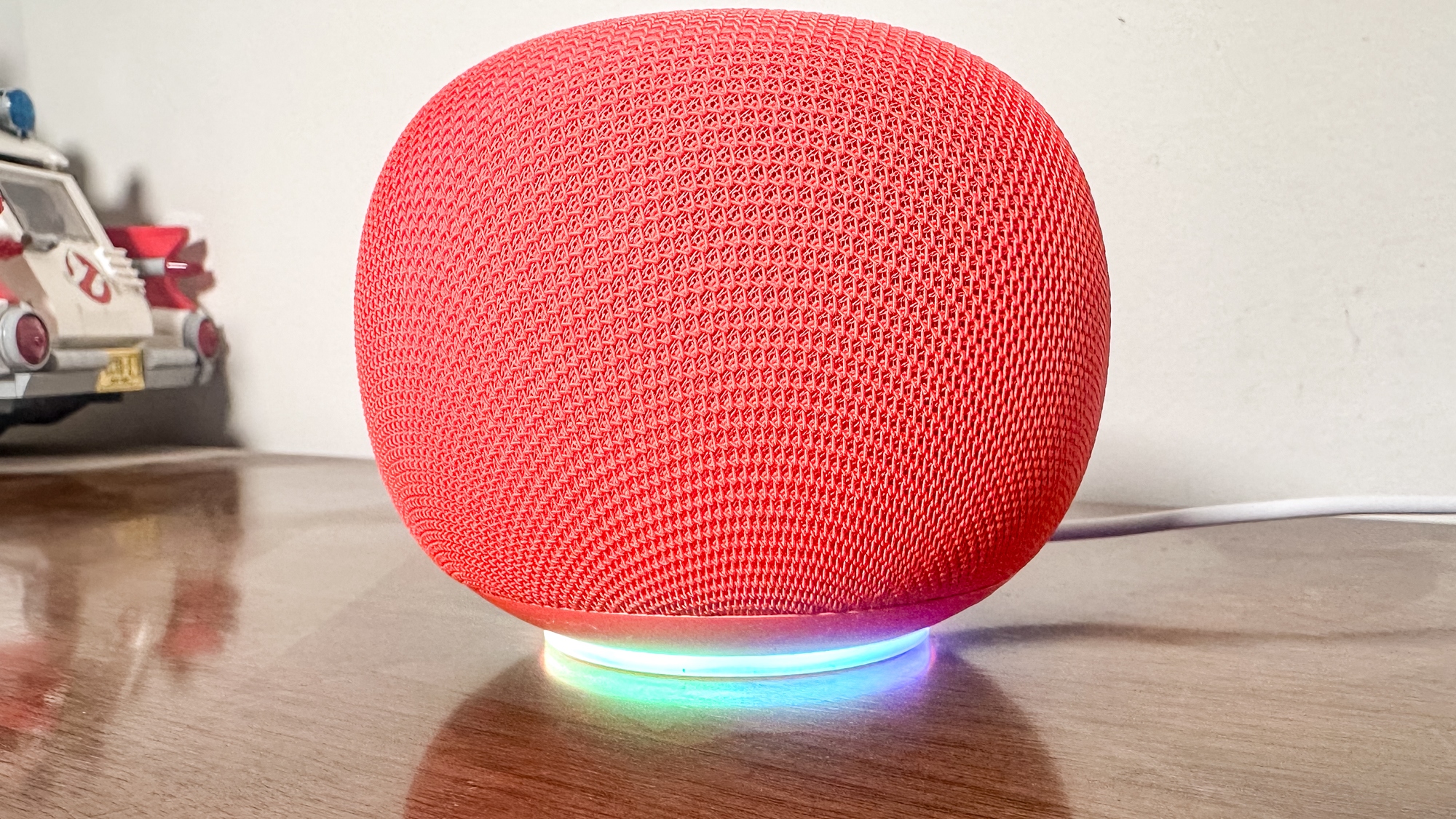
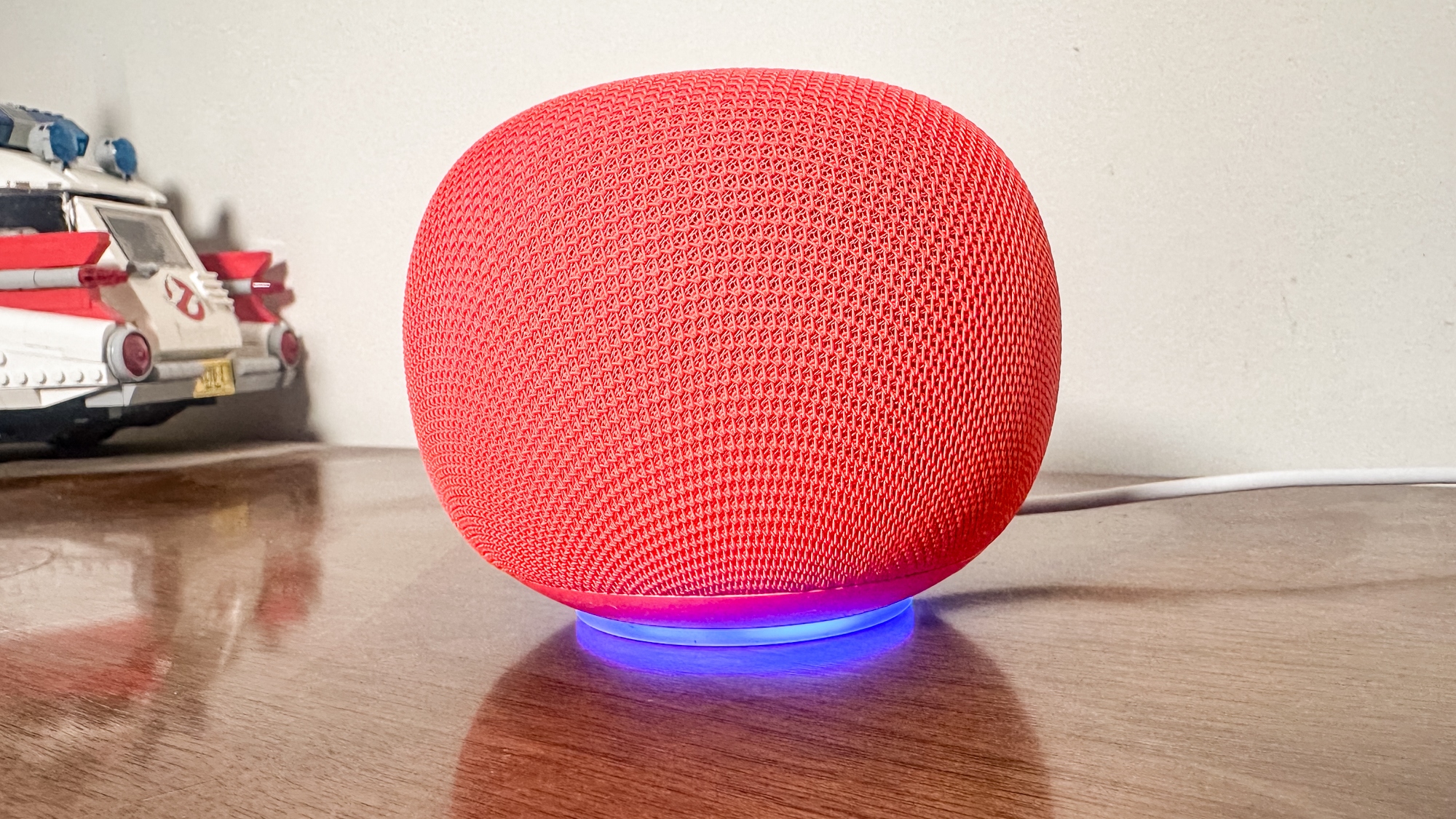
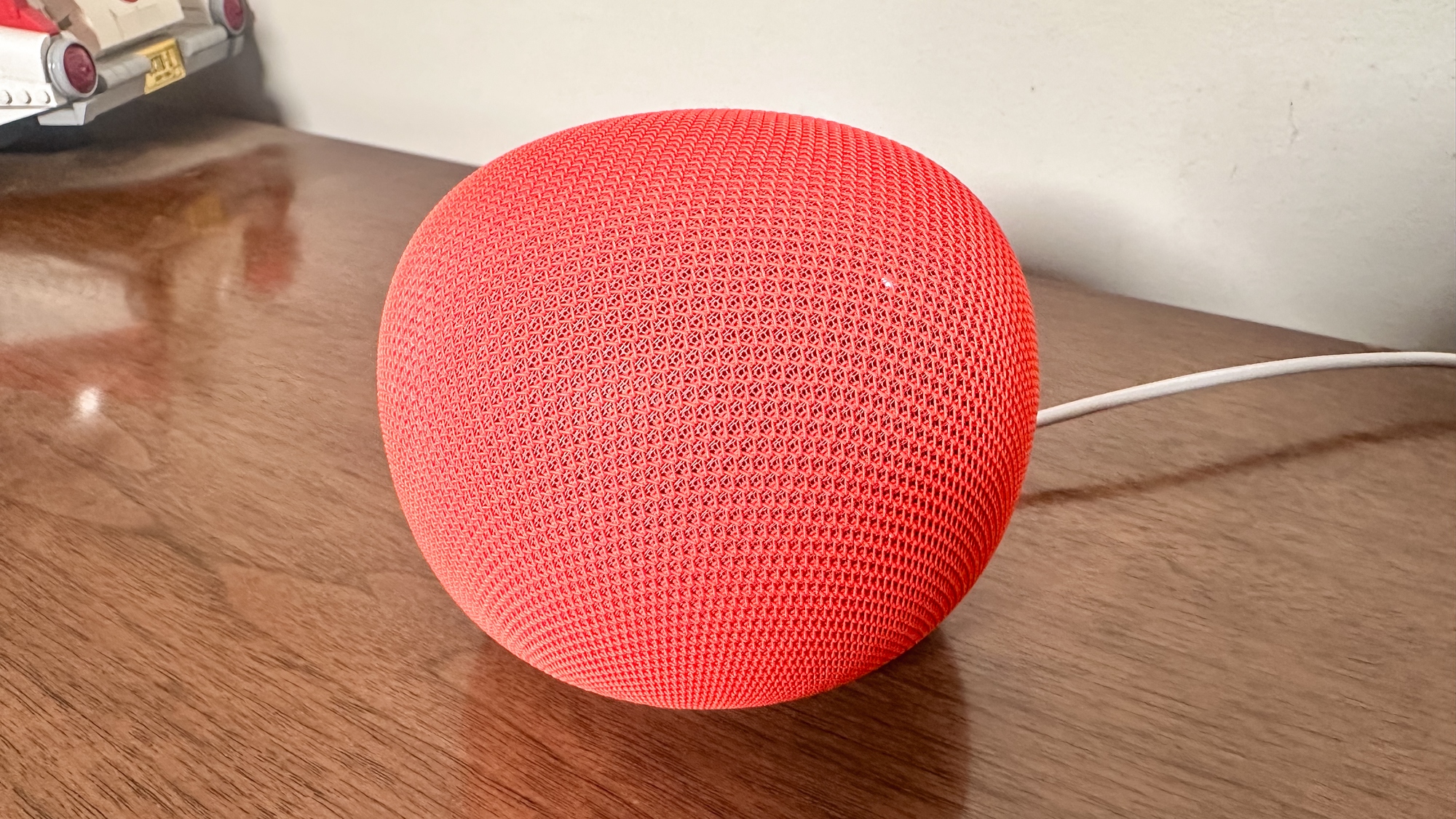
The rounded design resembles a slightly flattened Apple HomePod mini. Two fabric-covered touch controls on top adjust volume, but they remain invisible until a tap illuminates their LEDs. Even then, nothing visually identifies volume up or down; users must try them. Tapping the top also plays or pauses music.
Google's earlier speakers used similarly concealed controls, with mixed results; the Mini's buttons were disabled because they were unreliable. Prospero found the extra tap needed to locate the new controls irritating.
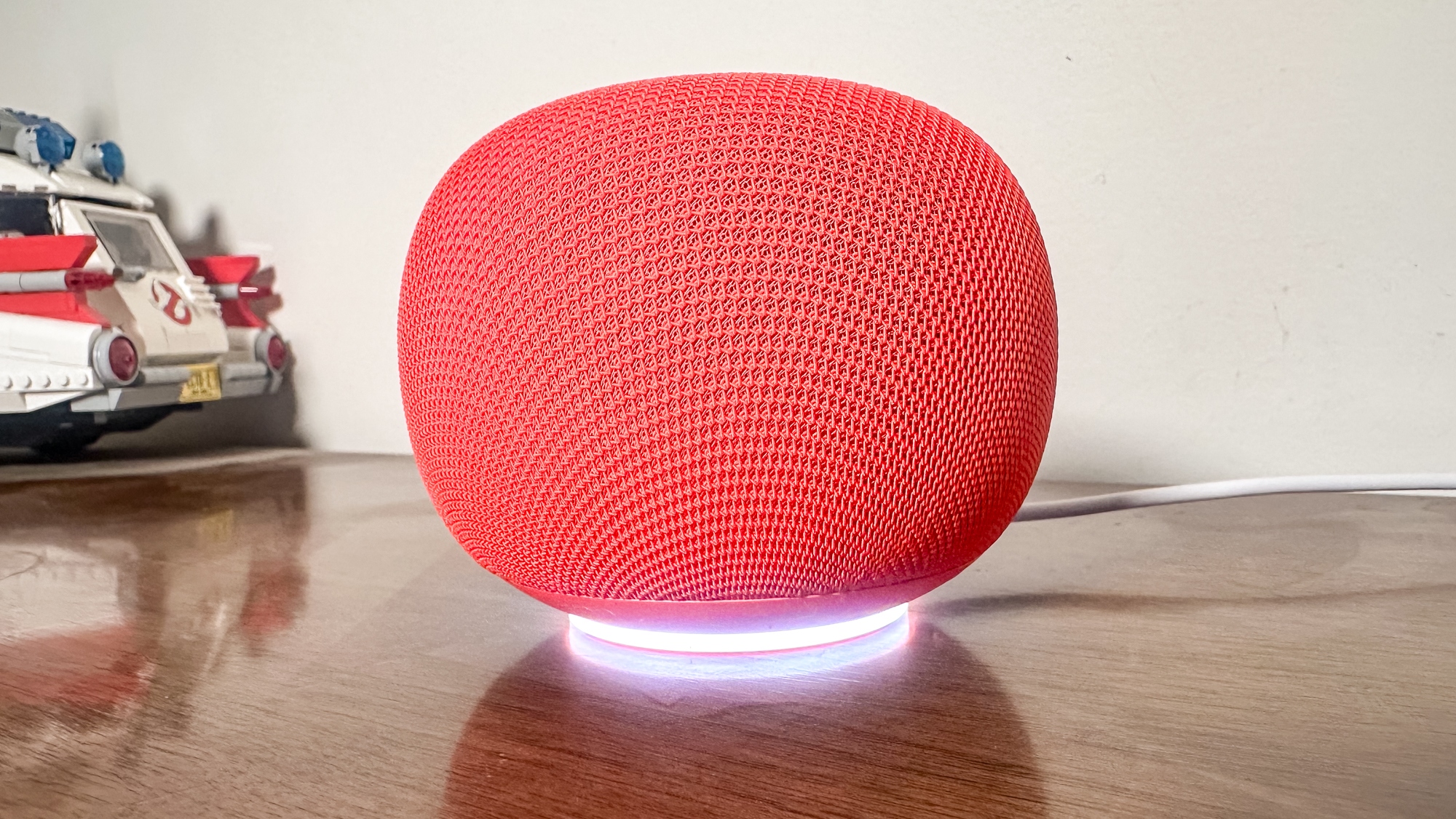
A circular LED ring, similar to the Echo Dot Max's, indicates activity: white means Gemini is listening, multiple colors indicate processing, and orange signals that the microphones are off.
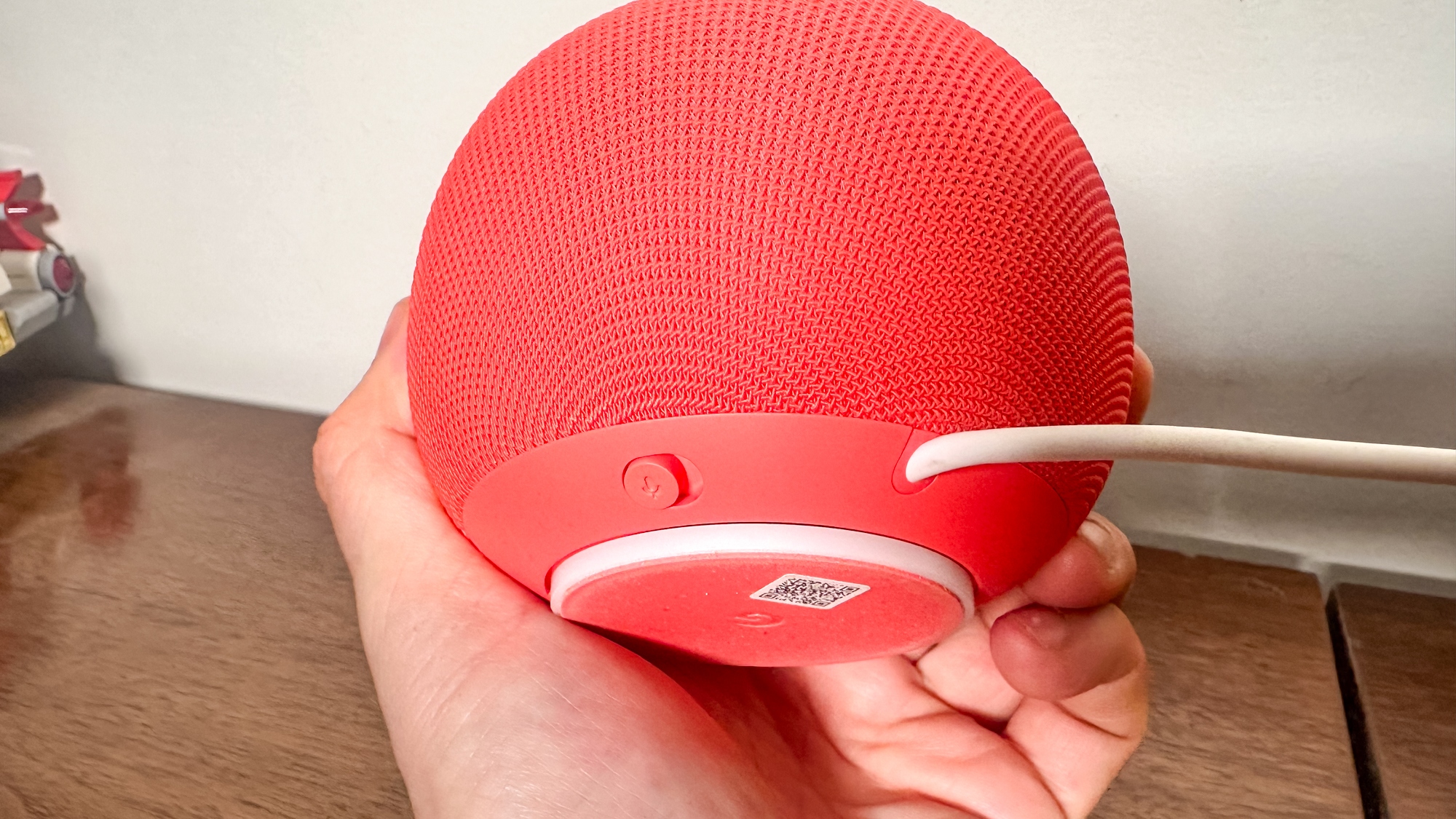
A physical microphone-disable switch on the base is welcome. The permanently attached power cord is less convenient: damage to it means replacing the entire speaker.
Sustainability
Google says the speaker and adapter are “Made with at least 37% recycled materials based on product weight,” without clarifying whether that refers to metal or plastic components.
Amazon reports that the Echo Dot Max contains 23% recycled materials, including fabric made from 98% post-consumer recycled fabric and plastic made from 41% post-consumer recycled plastic.
The Apple HomePod mini incorporates 99% recycled rare earth elements and at least 35% recycled plastic in multiple components.
Sound quality
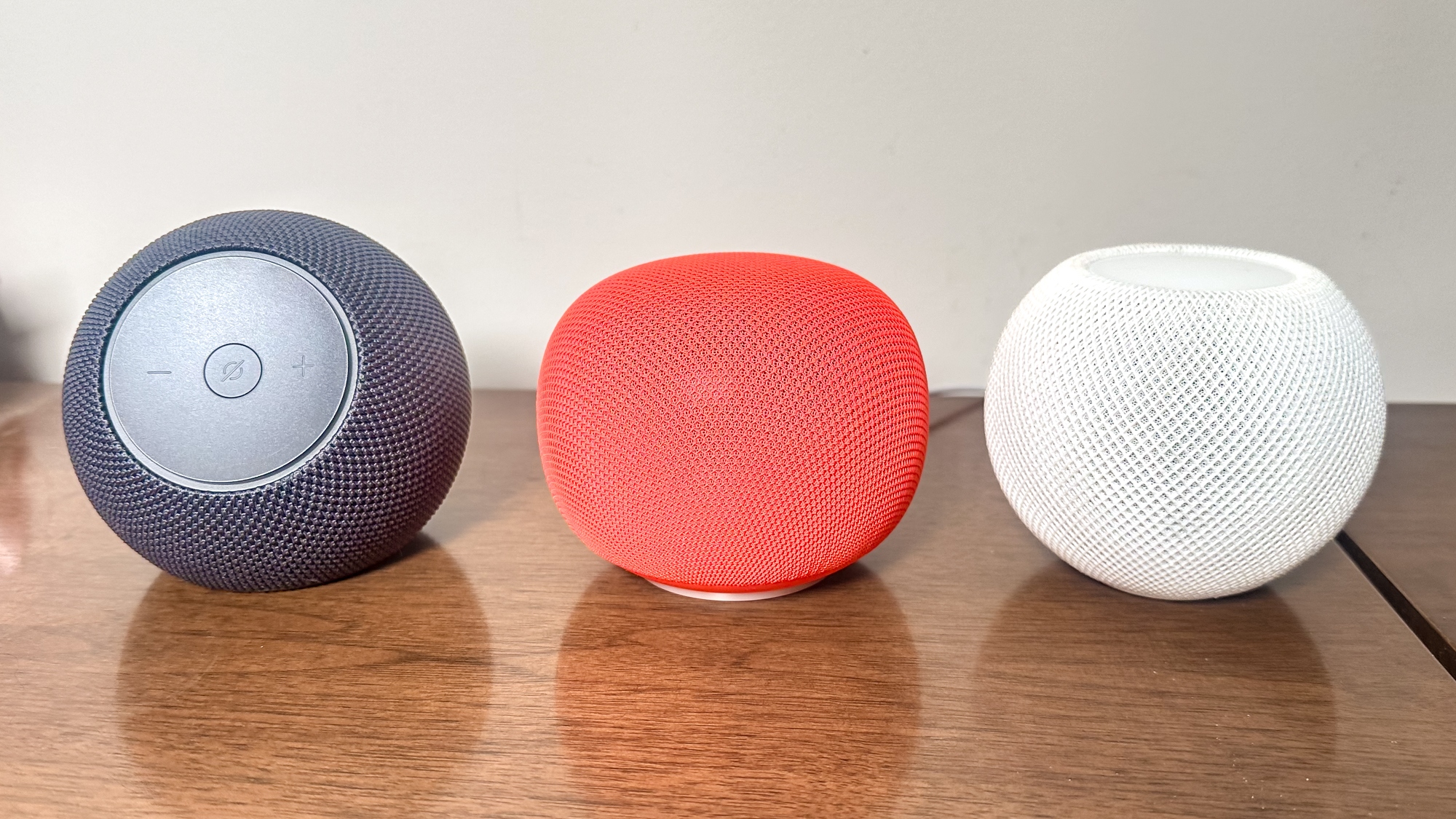
Instead of the Nest Audio's 75mm woofer and 19mm tweeter, the Google Home Speaker uses one 58mm driver. Prospero did not have a Nest Audio for a direct comparison, but found the new speaker performed well for its size.
Across assorted tracks, differences between the Google Home Speaker, HomePod mini and Echo Dot Max were relatively subtle. Prospero gave the Echo Dot Max a possible slight overall advantage: its 0.8-inch tweeter and 2.5-inch woofer helped midrange detail stand out against Google's speaker and the HomePod mini, which uses a single 2-inch driver.
Billy Joel's voice on “Movin’ Out” sounded somewhat compressed on the Google speaker. The Echo Dot Max delivered warmer vocals and stronger bass, though the HomePod mini sounded best on that track.
The Echo Dot Max led on Olivia Rodrigo's “Drop Dead,” separating mids and highs more clearly than either rival. Bass from Google's speaker was merely adequate: on Snoop Dog's “Who am I (What’s My Name)?,” both the Echo Dot Max and HomePod produced a more satisfying groove.
Gemini capabilities
Gemini is the more significant upgrade, offering substantially greater capability than Google Assistant. Gemini for Home works across Google's smart speakers and displays, but the full experience, including the more conversational Gemini Live, is supported only on newer models: Nest Audio, Nest mini (2nd Gen), Nest Hub Max and Nest Hub (2nd Gen).
In Prospero's initial question tests, Gemini answered correctly and proved more engaging than the older Assistant. Asked for a chicken-wing recipe, it presented several options and highlighted choices it considered popular. When asked to save the recipe, it said it had created a note without specifying its location; Prospero subsequently found it in Google Keep.
A sports query exposed a weakness. Asked whether France had won that day, Gemini incorrectly said the team had not played, despite its World Cup victory over Iraq. After Prospero challenged the answer, Gemini corrected itself, summarized the match and reported that Les Bleus had reached the round of 32.
Subscription plans
Gemini for Home comes free with the speaker, but conversational Gemini and other capabilities require Google Home Premium.
Google Home Premium Standard costs $10/month or $100/year and includes:
- Gemini Live for expert help, brainstorming and learning about new topics
- Help me create, which builds smart home routines from descriptions given to Gemini
- Sound detection for smoke/carbon monoxide alarms and breaking glass
- 30 days of video event history
Google Home Premium Advanced costs $20/month or $200/year. Alongside the Standard features, it provides:
- Search video history through spoken requests
- Daily summaries of what happened while you were away
- 60 days of video history
- 10 days of 24/7 video history
- Descriptive notifications
- Event descriptions
Standard is also included with a Google AI Pro subscription at $20/month, while Google AI Ultra at $99/month includes Advanced.
Home theater support
One or two Google Home Speakers can pair with a Google TV Streamer for home theater playback. Using two enables spatial audio. Dolby Atmos is supported, and the streamer can convert HD audio into Google's proprietary spatial audio format.
Amazon offers a broader surround setup: Echo Dot Max and Echo Studio systems can use up to five speakers.
Smart home features
Google's speaker trails its rivals in built-in smart home capabilities. The HomePod mini includes temperature and humidity sensors. The Echo Dot Max offers ambient light and temperature sensors, presence detection and the ability to extend an eero mesh network.
Those additions allow more useful automation. Apple Home or Alexa routines can, for example, activate air conditioning when a speaker detects a temperature above a chosen threshold, or respond when someone enters a room.
Should existing owners upgrade?
Smart speaker releases have slowed: Google, like Amazon, has moved away from annual updates, leaving more than half a decade between the Nest Audio and this model. Meanwhile, Apple and Amazon have done more to integrate their speakers into smart homes through additional sensors.
Both Alexa and Google remain capable assistants, strengthened by AI features, and established users are unlikely to change ecosystems. The speaker is increasingly a way to access the assistant a household already prefers.
For owners of a working Google smart speaker, this model offers little incentive to replace it unless the goal is a Google-centered home theater setup.

About the reviewer
Michael A. Prospero is U.S. Editor-in-Chief at Tom’s Guide, where his testing interests include drones, electric scooters, video doorbells and other smart home devices. Previously, he served as Reviews Editor at Laptop Magazine and reported for Fast Company and the Times of Trenton, following an internship at George magazine. He studied at Boston College, working on The Heights, before attending Columbia University's journalism school. His other interests include running watches, skiing, marathon training and cooking with sous vide machines, smokers and pizza ovens.