Goals give people a concrete outcome to work toward. The author of this Forbes article on goal setting describes five benefits: triggering behavior, directing focus, maintaining momentum, aligning focus, and encouraging self-mastery. These benefits can apply to individuals, teams, and entire organizations.
Daily and weekly goals turn that direction into shorter-term priorities. The S.M.A.R.T. framework helps define them, while monday.com templates and board views provide ways to organize and track the work.
How goals support time management
Time management means planning and controlling how you spend your day so you can accomplish your goals. Clear goals and priorities help distinguish essential tasks from less important work.
Defining the outcome comes first: before developing other time management skills, you need to know what you want to achieve.
Why daily and weekly goals matter
A goal describes a desired outcome and directs attention toward it. Daily and weekly goals outline what an individual or team intends to accomplish during that period, ideally in line with the company's goals and mission. They also help sustain motivation.
Different timeframes serve different purposes:
- Annual goals are usually company-wide.
- Quarterly goals are often linked to sales figures.
- 12-week goals provide another planning timeframe.
- Weekly goals can structure team-focused sprints.
- Daily goals usually guide individual work.
Whatever the timeframe, goals need to be set, reviewed regularly, and actively pursued.
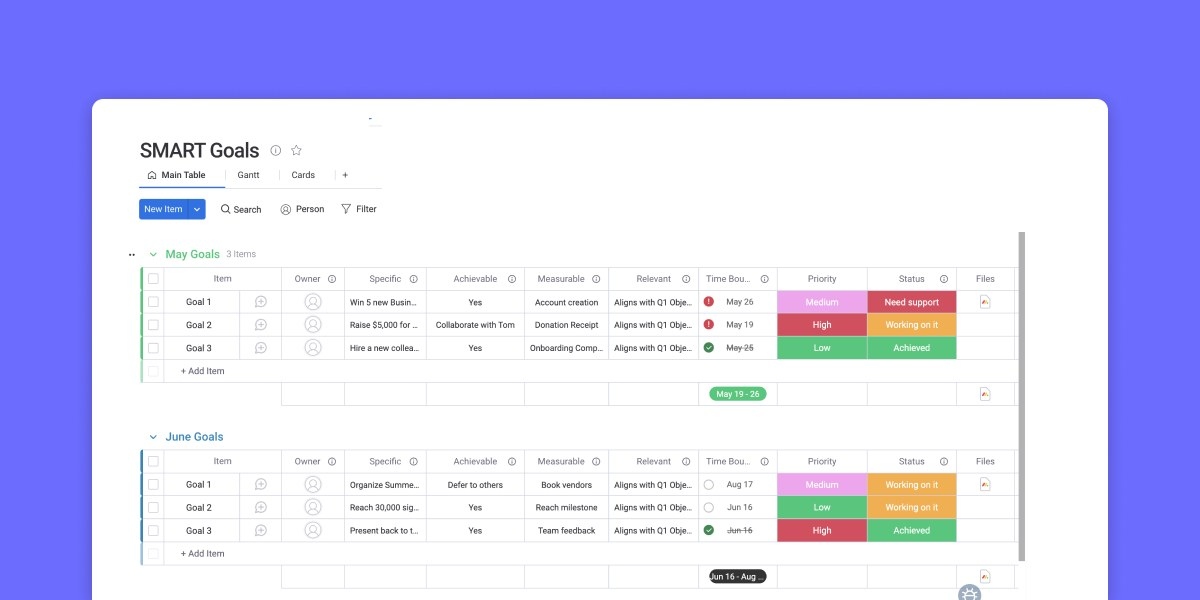
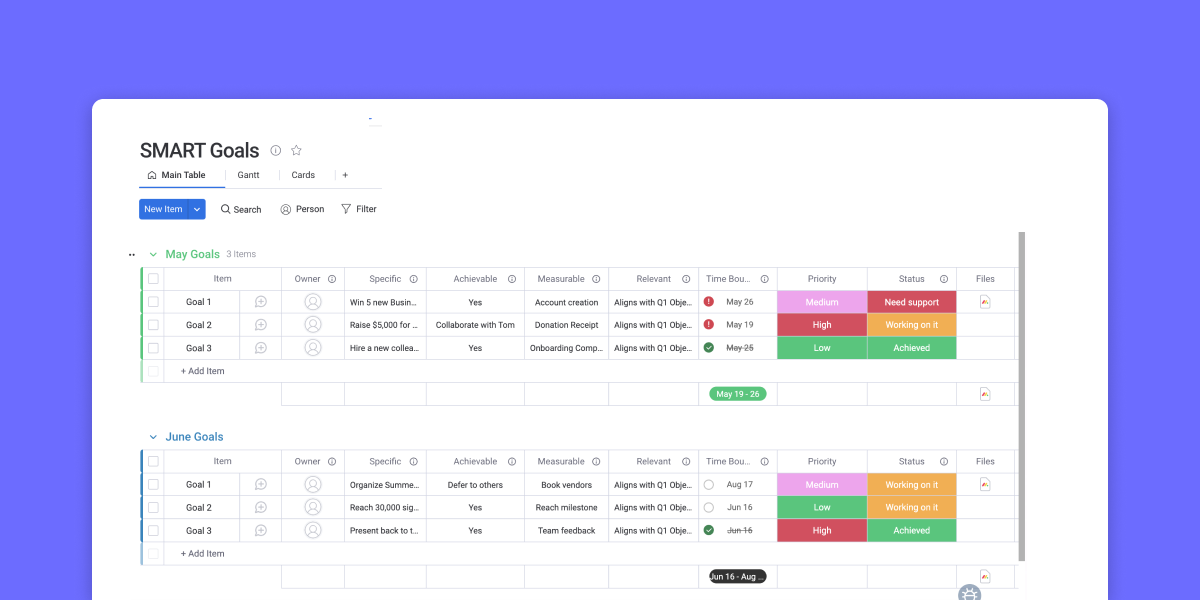
Define goals with the S.M.A.R.T. framework
S.M.A.R.T. stands for Specific, Measurable, Attainable, Relevant, and Time-Bound. Together, these qualities clarify what you intend to accomplish, how you will get there, and when it should happen.
Specific
A useful goal is clear and precise rather than vague. Compare “My goal is to lose weight” with “My goal is to lose 10 pounds over the next 3 months.” The second identifies a concrete outcome and timeframe.
The same distinction applies at work: “Our team will increase sales” is less specific than “Our team will increase sales by 15% by the end of the year.” You can refine the goal further by explaining how sales will grow, what will change, and what will be added.
Measurable
Define how you will recognize success. A suitable measurement lets everyone on the team assess progress throughout the project.
Reports, dashboards, KPIs, OKRs, and other visual tools can help track daily and weekly progress against goals.
Attainable (Achievable)
Consider whether the goal is realistic given past experience, the available budget, and current resources. If it is not clearly achievable, scale it back.
Goals should stretch the team without exceeding what it can reasonably deliver. They can even become BHAGs—Big Hairy Audacious Goals, a term coined in the 1994 book Built to Last: Successful Habits of Visionary Companies—but ambition needs limits. Aim for a balance that satisfies both the team and its stakeholders.
Relevant
Ask whether the goal is necessary, whether it serves the team or project, and how it contributes to the company's broader goals. Being achievable is not enough: if a goal does not support the company's success, revise it or discard it.
Time-Bound
Give goals checkpoints and a final deadline. Without a timeline, the work risks becoming open-ended.
Deadlines create urgency and accountability, help teams stay on track, and support decisions about priorities, workload, and resources.
Visualize goals with monday.com
monday.com offers more than 200 fully customizable templates, including project management and marketing templates for organizing daily and weekly goals.
Its Work OS starts with a visual board. Nearly 3 dozen column types can be dragged and dropped to build workflows around your project or process, including due dates and status columns.
Once a template is in place, different board views let you examine the same information in several ways:
- Gantt Charts: Horizontal bars show a project's planned schedule, including tasks or events over a defined period.
- Kanban Boards: Columns and cards divide a project into manageable, actionable pieces.
- Timelines: A visual project overview shows who is working on each task and when completion is expected.
- Calendars: Monthly, weekly, and daily views bring upcoming tasks, items, and goals together.
These views support analysis and reporting on board data. Whether your goals are annual, quarterly, monthly, weekly, or daily, monday.com's Work OS provides ways to visualize, track, monitor, and report on them.